
Research
Research that works in the wild
We use acoustics, sensing, and intelligent systems to understand machines, support decisions, and close loops.
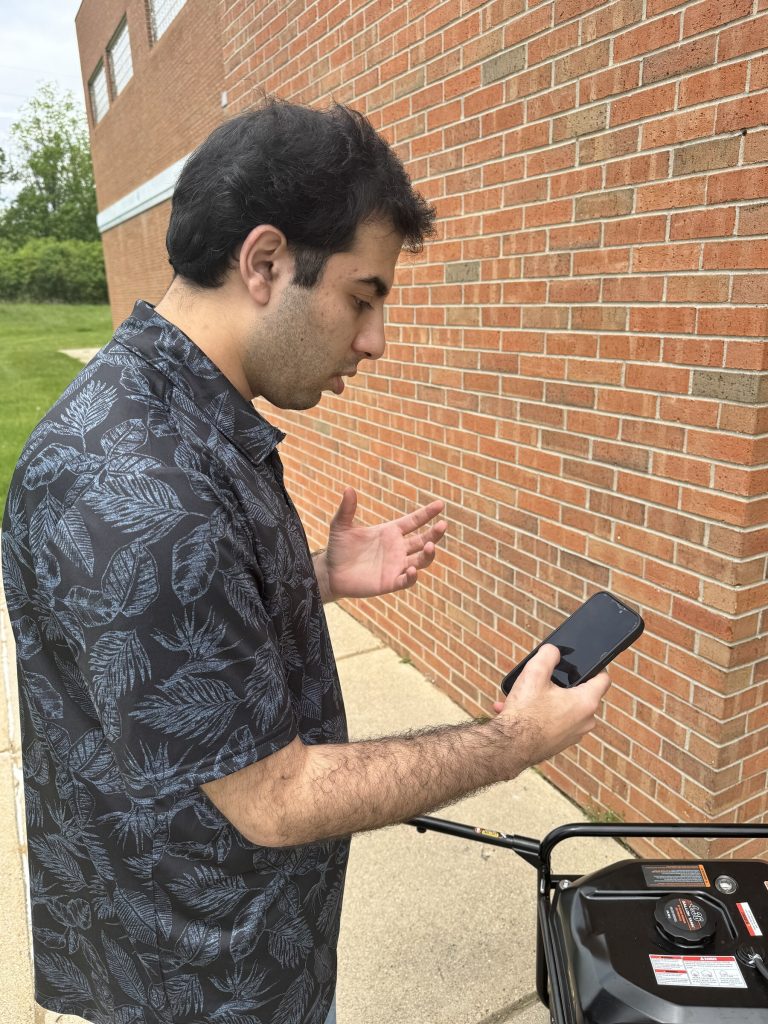
Acoustic intelligence and diagnostics
Hear the failure earlier
A motor, fan, tire, tool, or pump changes its sound as its condition changes. We use ordinary microphones and machine learning to find those changes before a failure becomes obvious.
Training a monitor usually means recording many failures, which is slow and expensive when the failures are rare. We work in the other direction, building models that hold up on short recordings, small sample counts, and narrow operating ranges.
Across devices
A model should not stop working because the microphone changed. Current work corrects differences among phones and other commodity sensors.
Across time and place
Recordings collected in one session are rarely the whole story. We test across locations, operating conditions, and stages of wear.
With honest uncertainty
A useful system should say how certain it is. Conformal methods add defensible intervals to audio quality predictions.
Current team: Kehinde Elelu, Tashfain Ahmed, Kyle Foster, Paremeswar Nair, Tejas Agrawal, Mohammadali Saffary, and Joshua Siegel.
Embedded expertise
We build systems that carry technical judgment into the moment it is needed. They may recommend a maintenance action, flag a risky condition, change how a machine operates, or ask a person to review the evidence.
The form follows the job: a predictive model, a generative system, a structured workflow, a controller, or something simpler.
Robotics, automation, and manufacturing
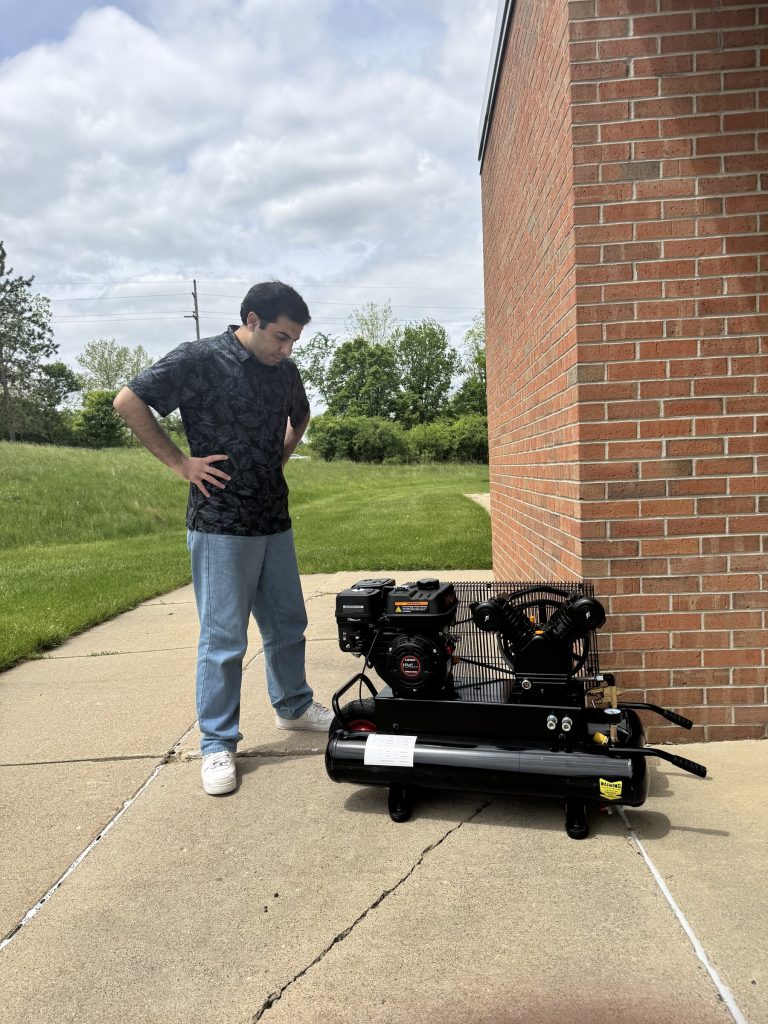
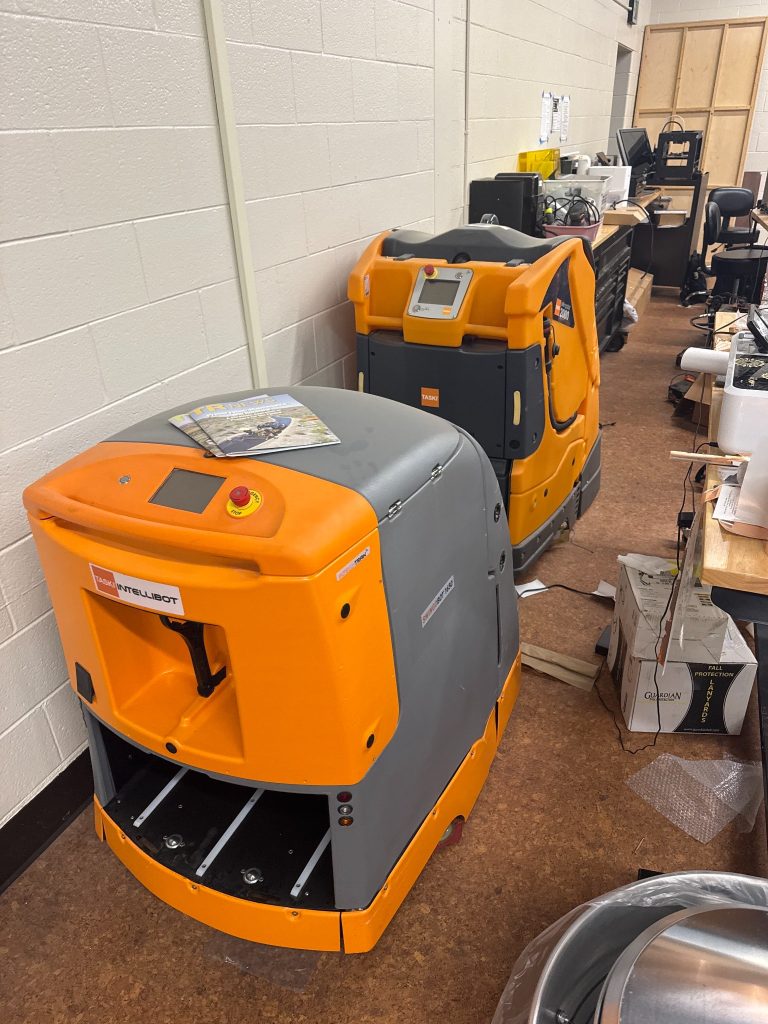
We put perception and intelligence on real equipment. What can the machine observe? What does that observation mean? What should happen next?
Connected vehicles and mobility
Vehicles are machines, sensor networks, and participants in a larger transportation system. We use their existing signals to study condition, context, safety, and interaction. Earlier projects explored smartphone-based diagnostics, secure vehicle data, physically adversarial situations, and edge intelligence. Those results still shape work on other machines today.
From signal to action
The research is not finished at a good classifier. We ask what decision the result supports, who should make it, and what evidence they need.
One · Problem
Start with the failure, decision, or constraint.
Two · Signal
Find the smallest useful observation.
Three · System
Build the model, workflow, or controller.
Four · Validation
Test it on the real machine, with the variation the real world brings.
Selected 2026 work
- Tashfain Ahmed, Mohammadali Saffary, and Joshua Siegel. “Cross-Device Spectrum Correction for Sustainable Acoustic Monitoring of Everyday Mechanical Equipment.” ACM GoodIT 2026.
- Kehinde Elelu, Joshua Siegel, Mohammadali Saffary, Tashfain Ahmed, Simeon Babatunde, and Ebuka Okpala. “ConformalMOS: Uncertainty-Aware MOS Prediction with Conformal Intervals and Ordinal Modeling.” Interspeech 2026.
- Multi-session, multi-device acoustic dataset for progressive tool degradation monitoring. Data in Brief.
- Pareto data framework for resource-efficient edge and IoT machine learning using Minimum Viable Data. Cyber-Physical Systems.
Have a machine, dataset, or question we should see?
Tell us what you are working on. A useful collaboration often begins with a short conversation.